What is Balance and Stability Training?
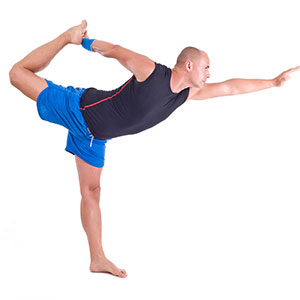
Balance and stability training is a remedial and rehabilitative program to improve the stability and balance of your body through specific exercises. These exercises typically target your core muscles, legs, and lower back, to strengthen them and improve overall balance and stability.
Many of your body’s structures like the heart, blood vessels, nerves, muscles, and bones need to function normally for you to have normal balance and stability. If they fail to function well, you will experience balance and stability issues.
Balance and stability problems can make you dizzy and unsteady and may sometimes cause blurred vision. You may experience a floating sensation or feel as though you are spinning or moving when lying down or at rest.. You may sway when you try to stand or walk. Balance and stability problems can lead to an increased likelihood of falling, thereby interfering with your daily activities.
The main objectives of balance and stability training are to:
- Maintain proper body balance
- Restore lost or impaired balance
- Improve stability and muscle endurance
- Strengthen affected muscles, including legs and core
- Help prevent falls
- Ensure safe functional mobility
Who Needs Balance and Stability Training?
Several medical conditions can cause balance and stability problems, but the most commonly seen is a disturbance of the inner ear (vestibular system).
Individuals of all ages with limited functional disability or with arthritis are potential candidates for balance and stability training. However, there are other factors that may necessitate the need for training. These include the following:
- Neurological issues like stroke
- High or low blood pressure
- Vertigo
- Medication side-effects
- Previous surgery after-effects
- Head injury
- Viral infections
- Impaired vision
- Aging
- Improper blood circulation
Who Provides Balance and Stability Training?
Typically, a trained therapist who understands the body balance system and its relationship with other body systems designs and provides customized balance and stability training. He or she will first physically examine the patient, assess the symptoms and medical history, and perform balance-related tests to identify the cause of the balance and stability issues. A precise training program is then designed to target areas of weakness and improve any functional limitations. Exercises to suit all ages, fitness levels, and lifestyles are available and can be adjusted based on individual needs.
Common Exercises for Balance and Stability Training
Balance and stability training often includes a walking regimen accompanied by balance, coordination, and postural exercises for a specific period. They include, but are not limited to, the remedies below:
Head or body movements
- Head movement: Stand up tall, look ahead, slowly turn your head as far as you can to the right and then the left.
- Back extension: Stand up tall with your feet shoulder-width apart, place hands on the lower part of your back and gently arch your back.
- Trunk movement: Stand up tall, place hands on your hips, and turn as far as you can first to the right and then to the left, keeping your hips locked.
- Walking and turning around: Walk at a regular pace, turning in first a clockwise and then anti-clockwise direction.
Sideways walking
Stand up tall, place hands on your hips, take ten side steps first to the right and then to the left.
Heel-toe walking
Bring your arms up to be parallel to the floor. Walk in a straight line slowly so that the heel of one foot touches the toe of the other foot.
One-leg stand
Stand straight, raise one leg bending your knee 45 degrees and hold for 5 to 10 seconds. Repeat with the other leg.
Sidestepping
Stand tall, step to the right and then bring your left foot to meet your right foot. Repeat with the left foot to complete the cross-stepping.
Sit-to-stands
Sit in a firm chair that is not too low. Lean forward over your knees and stand without using your arms for balance.
One-Leg Squat
Stand with your feet placed firmly on the floor. Add pres-sure on one leg and slowly lift the other, non-supporting foot slightly off the floor and lower to a squat position. Hold this position and perform up and down one-leg squat motion of 10 to 15 repetitions for 2 to 3 sets. Extend your arms for balance if necessary.
One-Leg Balance
With your hands on a chair back, countertop, or wall, slowly lift one leg upward behind you so that your weight lies on the other leg. Hold this position for 20 to 30 seconds and gradually progress to more seconds as you get stronger.
Step Up and Step Down onto Balance Board
Put down a balance board (or foam pad or soft pillow) to a level that is 6 to 8 inches higher than your starting point. Now, step up and step down 10 times.
Balance Board with Half-Squats
Place a wobble board on the floor and carefully place both of your feet on the board. While balancing on the wobble board, try to perform slow and controlled half-squats of 8 to 10 repetitions. Gradually increase as you feel comfortable.
Balance Board Ball Toss
While balancing on a balance board or wobble board, ask your partner or therapist to throw a small medicine ball weighing 5 pounds towards you so that you can catch it while maintaining your balance on the board.
Others
Tai chi, yoga, tight-rope walk, stretching, or squatting exercises.
All the exercises mentioned need to be performed and re-peated as instructed by your therapist.
Frequency
Though there is no predetermined limit when it comes to frequency of balance and stability training exercises, 3 to 5 sessions per week can be effective in improving your balance and stability.
Eventually, your therapist will decide how frequently and how long each exercise needs to be performed for the best outcome.
Best Practices
- Ensure that the training area is well lit and is without unrestrained pets
- Make sure that you are on a flat, stable, and non-slippery surface
- Ensure that the area is free of any tripping hazards
- Make sure there is a stable surface close-by to grab in case you start to fall
- Keep your eyes open during exercises to help im-prove brain-muscle coordination
- Start with an easy balance exercise and progress to the next level gently and gradually
- Look out in front of you - not at your feet - and maintain good posture with a strong core
Benefits
Some of the benefits of balance and stability training include:
- Better communication between the muscles and brain
- Increased coordination and fluidity in the body
- Strengthened muscles
- Enhanced posture and upright stability
- Minimal or no falls
- Improved functional balance of the body
- Better general fitness level and well-being
- Improved confidence and overall quality of life